


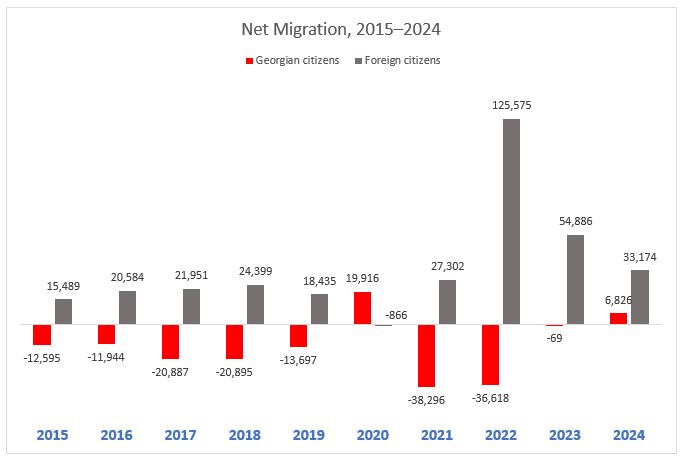
- As a result of the recalculation of migration statistics, Georgia’s positive net migration balance for 2015–2024 increased by 225.8 thousand, bringing the aggregate population figures into alignment with the population census results.
- Under the same recalculation, the figure for Georgian citizens who remained abroad as emigrants during 2015–2024 decreased by 115.4 thousand, while the figure for foreign citizens settling in Georgia increased by 110.4 thousand.
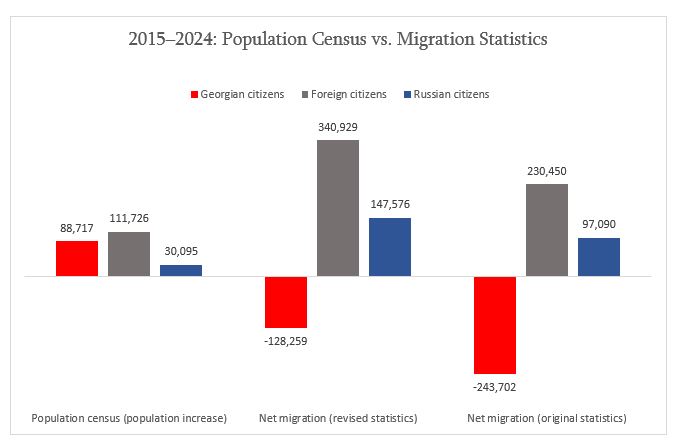
- However, the recalculation failed to ensure consistency between statistical data disaggregated by individual criteria. For example, according to the population census, the number of Russian citizens residing in Georgia increased by 30.1 thousand over the ten-year period. The original migration statistics showed an increase of 97.1 thousand, while the recalculated figure indicates an increase of 147.6 thousand.
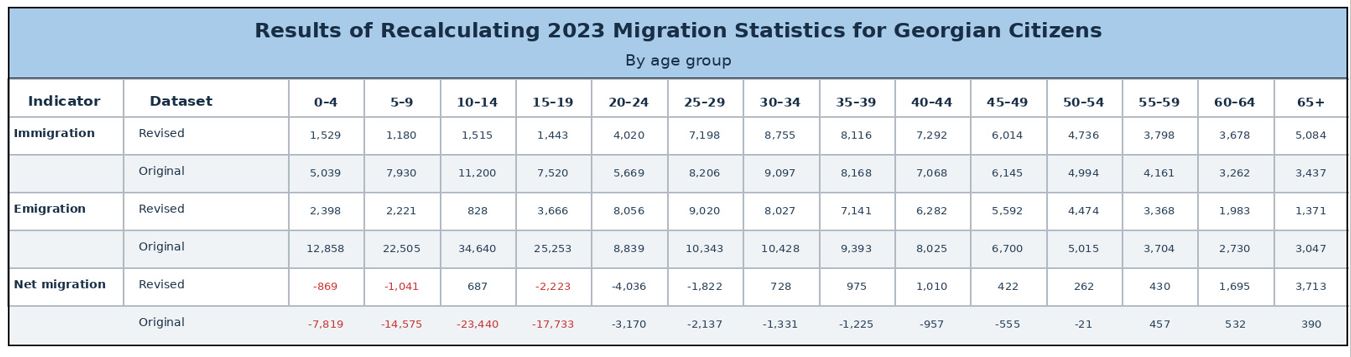
- Following the revision of the original statistics, the figure for Georgian citizens under the age of 20 who remained abroad in 2023 (negative net migration) decreased by approximately 60 thousand (95%).
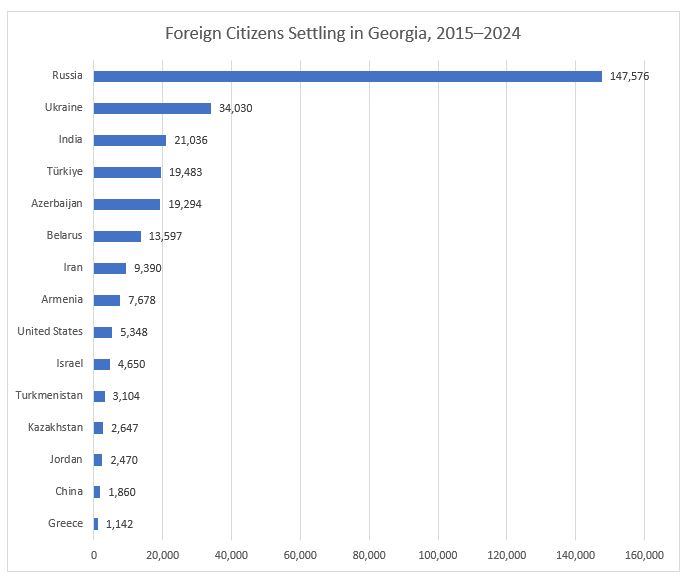
- Of the 340.9 thousand foreign citizens who settled in Georgia during 2015–2024, Russian citizens accounted for the largest share – 147.6 thousand.
- In addition, the following nationalities recorded high positive net migration balances in Georgia: citizens of Ukraine (34 thousand), India (21 thousand), Türkiye (19.5 thousand), Azerbaijan (19.3 thousand), Belarus (13.6 thousand) and Iran (9.4 thousand).
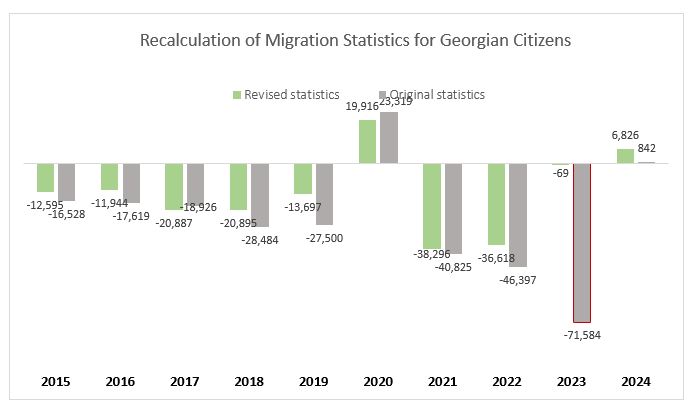
- The recalculation brought the greatest change to the statistics for 2023. The highest negative net migration balance recorded for Georgian citizens that year (71.6 thousand) was reduced to almost zero as a result of the recalculation.
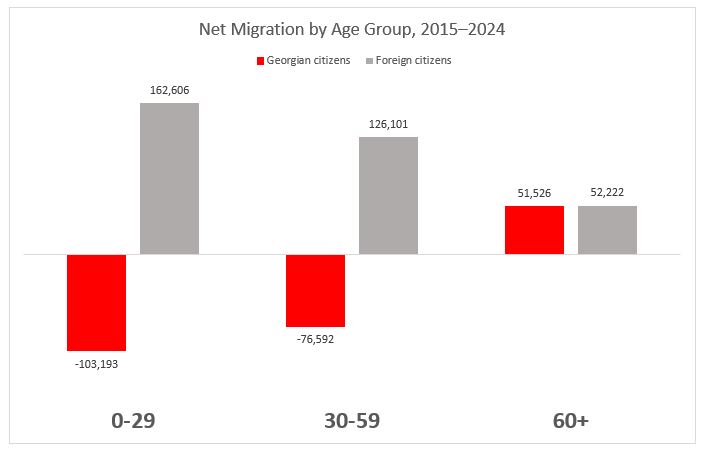
- The recalculated migration statistics also confirm that Georgian citizens leaving the country are predominantly young people or families with children, while those returning to settle in their homeland are mainly of retirement age.
- During 2015–2024, 103.2 thousand more Georgian citizens under the age of 30 emigrated than returned, while 162.6 thousand more foreign citizens in the same age group arrived to settle in Georgia than left the country.
According to the final results of the 2024 Population Census, Georgia’s population stands at 3.93 million, an increase of 215.8 thousand compared with the previous census conducted in 2014. Of the population permanently residing in Georgia, 96% (3.767 million) are Georgian citizens, 3.4% (133,857) are citizens of other countries, and the remaining 0.7% fall into the following categories: dual citizenship (8,865), stateless persons (1,063) and citizenship not specified (19,246).
Following the publication of the final population census results, IDFI published an analysis highlighting ambiguities in the census findings and the scale of discrepancies compared with annual demographic statistics. For example, the census results indicated that Georgia’s population had increased by 215.8 thousand over the preceding ten years (2015–2024), whereas the annual demographic indicators showed a decrease of 17.5 thousand. Specifically, during 2015–2024, the total number of deaths exceeded the number of births by 4.2 thousand, while net migration was negative at 13.3 thousand.
Subsequently, in order to eliminate the discrepancy between the results of the 2024 Population Census and the annual demographic indicators, the National Statistics Office of Georgia recalculated the demographic indicators for 2015–2024. According to Geostat, birth and death figures remained unchanged during the recalculation, and the existing imbalance was corrected by revising the migration component. The recalculation covered annual migration indicators, including breakdowns by age, sex and citizenship.
The recalculation of migration statistics corrected the discrepancy between the aggregate population figures obtained using different methodologies. However, it failed to ensure consistency between statistical data disaggregated by individual criteria. Moreover, in certain cases, the discrepancies increased. Population statistics by citizenship are particularly noteworthy in this regard. For example, according to the 2024 Population Census, the number of foreign citizens among Georgia’s resident population increased by 111.7 thousand compared with the previous census in 2014. The original annual migration statistics showed a positive net migration balance of 230.5 thousand foreign citizens over the same period, but following the recalculation this figure increased to 340.9 thousand. A particularly pronounced discrepancy is evident in the case of Russian citizens. According to the census, their number among Georgia’s resident population increased by 30.1 thousand over the ten-year period. The original migration statistics indicated an increase of 97.1 thousand over the same period, whereas the recalculated figure is 147.6 thousand.
According to census data, the number of Georgian citizens in the country’s population increased by 88.7 thousand during 2015–2024. However, according to the annual migration statistics, 247.3 thousand more Georgian citizens emigrated from the country than returned over the same period. Although the recalculation reduced this difference to 128.3 thousand, the discrepancy between the datasets remains substantial.
The effects of the recalculation of annual migration statistics were not distributed proportionately across the years. The largest change occurred in the 2023 data, when the original statistics recorded the highest number of Georgian citizens leaving the country. For example, under the previous estimates of the annual migration statistics, 163.5 thousand Georgian citizens left the country in 2023, while 91.9 thousand returned. Accordingly, the negative net migration balance was 71.6 thousand. Following the recalculation, however, the negative net migration balance of Georgian citizens in 2023 was almost zero.
An analysis of the data by age group makes the scale of the changes in the recalculated 2023 migration statistics even more apparent. For example, according to the previous estimates of the annual migration statistics, 63.5 thousand Georgian citizens under the age of 20 remained abroad in 2023 (negative net migration). Following the recalculation, this figure fell to 3.4 thousand. According to the original official statistics, 23.4 thousand more children aged 10–14 left the country in 2023 than returned. The recalculated statistics, however, indicate that 687 more children in this age group returned to settle in Georgia than left the country.
As a result of the recalculation of migration statistics, the positive net migration balance for 2015–2024 increased by 225.8 thousand, bringing it into alignment with the population census results. This outcome was achieved by reducing the figure for Georgian citizens who remained abroad as emigrants by 115.4 thousand and increasing the figure for foreign citizens settling in Georgia by 110.4 thousand. According to the recalculated statistics, the largest number of foreign citizens settled in Georgia in 2022 – 125.6 thousand – coinciding with the outbreak of the Russia–Ukraine war.
According to the updated migration statistics, Russian citizens account for the largest share of the 340.9 thousand foreign citizens who settled in Georgia during 2015–2024 – 147.6 thousand. High positive net migration balances were also recorded for citizens of Ukraine (34 thousand), India (21 thousand), Türkiye (19.5 thousand), Azerbaijan (19.3 thousand), Belarus (13.6 thousand) and Iran (9.4 thousand).
The recalculated migration statistics by age group and citizenship, obtained from the National Statistics Office of Georgia through a public information request, also confirm that the majority of Georgian citizens who emigrate are young people and families with children, whereas those returning to settle in their homeland are mainly of retirement age. At the same time, young foreign citizens are replacing young Georgian citizens who have emigrated. For example, during 2015–2024, 103.2 thousand more Georgian citizens under the age of 30 emigrated than returned, while 162.6 thousand more foreign citizens under the age of 30 arrived to settle in Georgia than left the country. In addition, during the same period, 76.6 thousand Georgian citizens aged 30–59 remained abroad as emigrants, while 126.1 thousand foreign citizens of the same age group settled in Georgia.
The analysis presented above shows that the recalculation failed to ensure consistency between statistical data disaggregated by individual criteria. Furthermore, in relation to certain criteria, the recalculated figures further undermined the logical consistency of the data. For example, according to the population census, the number of Russian citizens residing in the country increased by 30 thousand over the ten-year period, whereas the recalculated migration statistics indicate an increase approximately five times as large (147.6 thousand).
In addition, the scale of the discrepancies recorded in individual years seriously calls into question the accuracy of border-crossing statistics. A clear example is 2023: the recalculation revealed a 95% discrepancy (approximately 60 thousand people) in the figure for Georgian citizens under the age of 20 who remained abroad.
Despite the scale of these discrepancies, the recalculated migration statistics, consistent with the population census results, continue to confirm that the settlement of foreign citizens in Georgia may be the only factor accounting for the country’s population growth over the past ten years. In the case of Georgian citizens, by contrast, there is an outflow of young people and families with children.
Alleged Sexual Violence against Giorgi Davitadze - Call for an Immediate and Effective Investigation
02.10.2026Solidarity with Vakho Sanaia
22.07.2026 Subscribe to Our News


